
 EN
EN
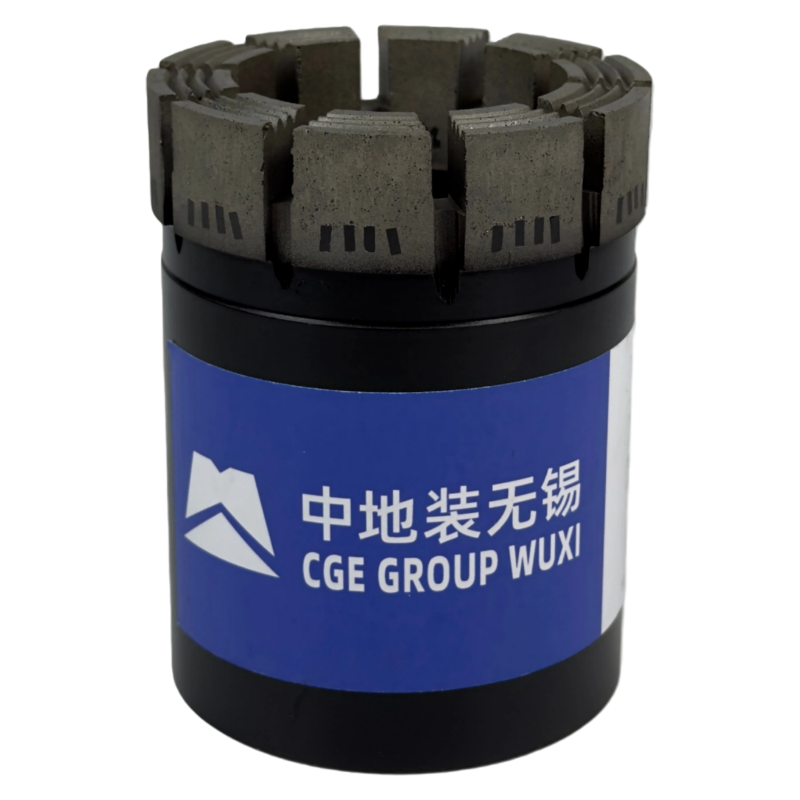
Real-Time Sensor Data Acquisition for Stone Core Drill Precision
IoT-Enabled Sensors on Stone Core Drill Rigs: Monitoring Load, Vibration, and Temperature
Modern stone core drill operations rely on connected IoT sensors to capture granular, real-time data that traditional manual monitoring cannot match. Mounted directly on drill rigs, these sensors track three critical parameters affecting drilling accuracy: drilling load, bit vibration, and operating temperature. Rotational torque sensors detect unexpected shifts in rock hardness and structural anomalies; vibration analysis systems identify early bit wear or misalignment—common precursors to trajectory drift; and temperature monitoring prevents overheating that can warp drill bits or cause premature failure before a usable core sample is completed. According to 2025 mining industry analysis, active drilling generates between 800 and 1,200 data points per minute, enabling continuous, responsive assessment of subsurface conditions.
In-Situ Rock Property Mapping and Its Impact on Stone Core Drill Trajectory Stability
The dense real-time data captured by on-rig sensors enables immediate, in-situ mapping of subsurface rock properties during active drilling. Unlike off-site lab analysis—which introduces delays and spatial gaps—this dynamic mapping reveals localized variations in rock density, fracture patterns, and composition as they occur. Before sensor-driven mapping, operators relied on generalized geological surveys that frequently missed small-scale heterogeneities—key contributors to unintended core deviation, compromised sample integrity, and wasted operational time. By generating a live digital profile along the drill path, in-situ mapping supports timely, incremental course corrections. This responsiveness significantly improves long-term trajectory stability—even in highly heterogeneous formations typical of mining and geotechnical applications.
AI-Powered Control Systems Optimizing Stone Core Drill Performance
Neural Network Models Dynamically Adjusting RPM and Weight-on-Bit for Variable Rock Formations
Traditional stone core drill operations rely on static pre-set parameters that fail to adapt to real-world subsurface variability. Dense granite, porous sandstone, and fractured fault zones each demand distinct drilling settings to preserve straight, accurate core samples. Neural network models now process incoming real-time sensor data—including load, vibration, and penetration rate—to adjust RPM and weight-on-bit automatically and continuously. This dynamic response maintains stable drilling across formation boundaries, minimizing unintended drift that compromises core quality and consumes operational time. Crucially, the models learn from each drilling cycle, refining future parameter recommendations for similar geologic contexts.
Laser-Guided Alignment and Digital Core Orientation for Sub-Millimeter Positional Accuracy
Even with optimized drilling parameters, minor initial alignment errors can compound over depth into significant deviation. To counter this, AI-powered control systems integrate laser-guided alignment tools to establish precise rig positioning before drilling begins. Complementing this, digital orientation systems track the drill bit’s position throughout the run—delivering sub-millimeter positional updates every few seconds. Any deviation from the planned trajectory triggers an immediate, fine-tuned correction. This dual-layer precision is essential for geotechnical surveys and mineral exploration, where core sample fidelity directly informs resource estimates, risk assessments, and long-term project planning.
Measuring the Impact: Quantified Gains in Stone Core Drill Accuracy
Case Study: 32% Reduction in Core Deviation Using AI-Optimized Drilling (Australian Mineral Survey, 2023)
The 2023 Australian Mineral Survey tracked 120 deep exploration drilling sites across Western Australian mineral deposits, comparing manual-adjustment rigs to AI-optimized smart rigs equipped with real-time sensor integration and neural control logic. The study documented a 32% reduction in core deviation—directly attributable to closed-loop sensing and adaptive parameter control. Additional outcomes included a 19% decrease in operational costs per meter drilled and a 24% improvement in intact core recovery. These results confirm that integrating IoT sensing and AI-driven automation delivers measurable, field-validated improvements in accuracy, efficiency, and sample reliability—supporting stronger geological interpretation and more confident investment decisions.
Frequently Asked Questions (FAQ)
What is the role of IoT sensors in stone core drilling?
IoT sensors monitor key drilling parameters such as load, vibration, and temperature in real time to improve accuracy and prevent equipment failures.
How does in-situ rock property mapping enhance drilling operations?
By capturing real-time data on rock density, fracture patterns, and composition, in-situ mapping allows operators to make timely adjustments, improving trajectory stability and sample quality.
What advantage does AI provide in core drilling operations?
AI-powered systems dynamically adjust drilling settings in response to real-time sensor data, improving accuracy, efficiency, and reducing operational costs.
How do laser-guided alignment tools benefit drill rigs?
Laser-guided tools ensure precise initial rig alignment and, together with digital core orientation systems, maintain sub-millimeter accuracy throughout drilling.
What results were observed in the 2023 Australian Mineral Survey?
The study demonstrated a 32% reduction in core deviation, a 19% decrease in costs per meter, and a 24% improvement in core recovery when using AI-optimized drilling systems.
Table of Contents
- Real-Time Sensor Data Acquisition for Stone Core Drill Precision
- AI-Powered Control Systems Optimizing Stone Core Drill Performance
- Measuring the Impact: Quantified Gains in Stone Core Drill Accuracy
-
Frequently Asked Questions (FAQ)
- What is the role of IoT sensors in stone core drilling?
- How does in-situ rock property mapping enhance drilling operations?
- What advantage does AI provide in core drilling operations?
- How do laser-guided alignment tools benefit drill rigs?
- What results were observed in the 2023 Australian Mineral Survey?