
 EN
EN
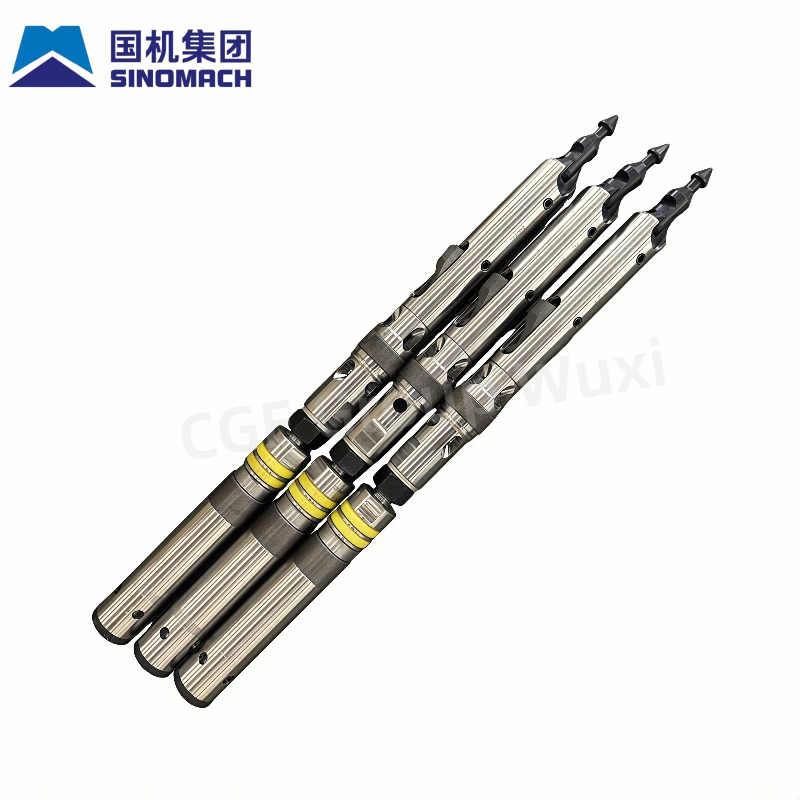
Core Recovery Mechanics: How Wireline Core Barrel Design Maximizes Sample Integrity and Yield
Core lifter dynamics and inner-tube stabilization for high-recovery performance
Wireline core barrel systems achieve superior core recovery through tightly integrated core lifter mechanisms and precision inner-tube stabilization. The core lifter—typically a spring-loaded or gravity-activated assembly—engages instantly upon core breakage, securing the sample before slippage or rotation can occur. Simultaneously, inner-tube stabilization isolates the core-carrying tube from vibration and torque transmitted through the rotating outer barrel. Advanced implementations use hydraulic dampeners and high-precision bearings to maintain concentric alignment under high-stress drilling conditions. According to a 2022 industry benchmark study published by the International Association of Drilling Contractors (IADC), such stabilized systems reduce core fragmentation by up to 40% in fractured rock compared to conventional barrels—enabling consistent 95%+ recovery rates in mineral exploration, where data fidelity and reduced re-drilling are critical.
O3 liner technology’s role in preserving core integrity and boosting recovery rates
O3 liner technology enhances core preservation through a purpose-engineered three-layer polymer sleeve that dynamically responds to formation behavior. Its low-friction inner layer eases core entry; the viscoelastic middle layer absorbs drilling-induced vibrations; and the thermally stable outer layer retains structural rigidity during retrieval—even at temperatures up to 150°C. This layered design prevents jamming in swelling clays and limits fluid invasion in porous or water-sensitive formations. Field validation across six mining projects documented a 30% reduction in core loss when upgrading from standard liners to O3 systems in reactive shales, directly improving geological interpretation accuracy and reducing post-run sample preparation time.
Time and Labor Savings: Quantifying Operational Efficiency Gains from Wireline Retrieval
Tripping time reduction: Measured savings per run in deep-hole drilling
Wireline core barrel systems eliminate full-string tripping by enabling core retrieval via overshot through the drill rods—a fundamental efficiency advantage over conventional diamond drilling. In operations exceeding 500 meters, this translates to 40–60% less tripping time per core run. A documented 1000-meter exploration project reported average time savings of 2.5 hours per run, accelerating hole completion and lowering rig-day costs. These gains stem not only from eliminating rod disassembly but also from reduced labor intensity and minimized non-productive time. Inner tube surface finishes and dimensional tolerances have been refined by leading manufacturers—including Sandvik and Boart Longyear—to ensure smooth, reliable retrieval even at depth, sustaining speed advantages without sacrificing recovery quality.
Extended core length capability and its direct impact on footage-per-trip productivity
Modern wireline core barrels now routinely support assemblies up to 9 meters long—more than triple the 1.5–3 meter capacity of traditional fixed barrels. This extended length allows significantly more core to be recovered per trip, directly increasing footage-per-trip productivity. Key operational benefits include:
- Higher average core recovery per shift due to fewer trips
- Reduced mechanical wear on drill rods, hoisting systems, and rod threads
- Improved core orientation continuity over longer intervals
In homogeneous formations where uninterrupted coring is optimal, field studies show 25–40% gains in meters drilled per shift using extended-length wireline systems. These improvements are sustained by advances in high-strength alloy barrels and reinforced inner tube retention—ensuring reliability and sample integrity across longer runs.
Reliability Engineering: Latch Mechanism Performance Under High-Stress Drilling Conditions
Latch mechanisms must withstand extreme torque, pressure fluctuations, and vibration—especially in deep or hard-rock drilling. Their failure risks both core loss and costly fishing operations. Among current designs, performance varies significantly under stress.
Pivoting, Link Latch™, and Roller Latch™: Comparative reliability under torque and vibration stress
Pivoting latches provide baseline functionality but exhibit higher susceptibility to misalignment and wear under sustained vibration. Link Latch™ systems distribute load across interconnected components, reducing localized stress and extending service life. Roller Latch™ technology—featuring hardened rotating elements—minimizes friction, heat buildup, and wear, making it especially resilient in high-vibration environments common in deep-hole applications. Field data compiled by the Canadian Institute of Mining, Metallurgy and Petroleum (CIM) shows Roller Latch™ mechanisms maintain functional integrity across 98% of deployment cycles under vibration exceeding 15 Gs; Link Latch™ systems achieve 95% reliability in comparable conditions. Selecting the appropriate latch type is not merely a mechanical choice—it’s a strategic decision that directly influences uptime, core recovery consistency, and overall project economics.
Adaptability in Challenging Geology: Wireline Core Barrel Performance Across Difficult Formations
Field validation: Fractured quartzite and swelling clays case study
Specialized wireline core barrel configurations deliver measurable performance gains in geologically demanding settings. In fractured quartzite—where core blockiness and structural instability lead to high loss rates—triple-tube systems combine inner-tube stabilization with O3 liner technology to improve recovery by 25–40% versus conventional single- or double-tube barrels. In swelling clays, where hydration-induced expansion compromises core integrity during retrieval, optimized core lifter geometry and anti-swab inner tube coatings prevent adhesion and tube binding. Case studies from active exploration programs in Western Australia and the Canadian Shield confirm sustained recovery rates above 90% in problematic clay sequences—compared to 65–75% with standard barrels. These outcomes underscore a foundational principle of modern coring: component-level adaptability—matched precisely to formation mechanics—is essential for delivering trustworthy geological data in high-stakes exploration zones.
FAQ
What is the role of inner-tube stabilization in wireline core barrels?
Inner-tube stabilization isolates the core-carrying tube from vibration and torque during drilling, maintaining alignment and minimizing core fragmentation.
How does O3 liner technology enhance core integrity?
O3 liner technology uses a three-layered polymer sleeve that protects the core from vibrations, heat, and formation fluids, improving both preservation and recovery rates.
What are the benefits of extended core length in wireline core barrels?
Extended core length increases productivity by recovering more core per trip, reduces wear on drilling components, and improves core orientation continuity over longer runs.
Why are latch mechanisms critical in high-stress drilling conditions?
Latch mechanisms ensure reliable core retrieval under extreme torque, vibration, and pressure, preventing core loss and costly fishing operations.
How do wireline systems perform in challenging geological conditions like fractured quartzite?
Specialized configurations, such as triple-tube systems and anti-swab coatings, significantly enhance recovery rates in fractured or swelling formations, delivering reliable geological data.
Table of Contents
- Core Recovery Mechanics: How Wireline Core Barrel Design Maximizes Sample Integrity and Yield
- Time and Labor Savings: Quantifying Operational Efficiency Gains from Wireline Retrieval
- Reliability Engineering: Latch Mechanism Performance Under High-Stress Drilling Conditions
- Adaptability in Challenging Geology: Wireline Core Barrel Performance Across Difficult Formations
-
FAQ
- What is the role of inner-tube stabilization in wireline core barrels?
- How does O3 liner technology enhance core integrity?
- What are the benefits of extended core length in wireline core barrels?
- Why are latch mechanisms critical in high-stress drilling conditions?
- How do wireline systems perform in challenging geological conditions like fractured quartzite?