Diamond drill bit selection guide: For deep holes, hard rock and geothermal core drilling
New application guide maps matrix hardness from Y1 to Y11 and six crown profiles to specific rock formations, giving drilling contractors a practical framework to raise rate of penetration, extend bit life and lower cost per meter.
CGE Group Wuxi Drilling Tools Co., Ltd. (CGE WUXI), the state-owned geological drilling tools manufacturer established in 1958, has consolidated its technical experience into a single selection guide for its impregnated diamond core bits — the DCDMA-standard BQ, NQ, HQ and PQ series used in wireline coring for mineral exploration, geotechnical investigation and geothermal projects.
The guide is published as exploration programs move deeper and into harder, more abrasive ground. Demand for critical minerals — copper, lithium, nickel, cobalt and rare earths — together with the expansion of geothermal energy development, is pushing boreholes past the depths where standard bit setups remain economical. In that environment the drill bit stops being a consumable and becomes the main lever on project cost.
Why bit selection now decides cost per meter
In a deep hole, the dominant cost is rarely the price of the bit itself. It is the time, fuel and rig hours consumed between trips — and the meters lost when a matrix is mismatched to the formation. A matrix that is too hard glazes over, stops exposing fresh diamond and stalls penetration. A matrix that is too soft wears away before it has cut its share of meters, driving up bit consumption and trip frequency. Matching matrix wear to diamond wear is what keeps the cutting face sharp through the full life of the bit.
That balance is a function of five variables, which the new guide treats together rather than in isolation:
Matching matrix grade to rock formation
The guide aligns matrix series with the formations most often encountered in core drilling. The table below summarises the grouping.
| Matrix Selection Chart | ||||||||
| Rock Type | Rock Fonmation | Abrasion | Bit Matrix Series | |||||
| Y1 | Y3 | Y5 | Y7 | Y9 | Y11 | |||
| Soft | Suitable for clay, shale, very soft sandstone, marl, argillite, mudstone and peat rock. | L | ● | ● | ||||
| M | ● | ● | ||||||
| S | ● | ● | ||||||
| Medium Soft | Suitable for limestone, rhyolite, andesite, marble, hard sandstone, limonite, dolomite, muscovite, schist, etc. | L | ● | ● | ||||
| M | ● | ● | ● | |||||
| S | ● | ● | ||||||
| Hard | Suitable for basalt, gneiss, granodiorite, hornfels, pegmatite, diabase, etc. | L | ● | ● | ||||
| M | ● | ● | ● | |||||
| S | ● | ● | ||||||
| Ultra Hard | Suitable for hard granite, quartzitic conglomerate, quartzite hard slate, qhyolite, etc. | L | ● | ● | ||||
| M | ● | ● | ● | |||||
| S | ● | ● | ||||||
Indicative grouping based on CGE WUXI’s published matrix selection chart. Final selection should account for rig parameters, bit load and flushing conditions.
Two adjustments matter in practice. Where a hole passes through alternating soft and hard interbeds — common in basin and cover-sequence drilling — a mid-range matrix with a stepped or semi-round crown usually holds penetration better than a matrix tuned to either extreme. Where the ground is uniformly hard and abrasive, as in deep granite, gabbro or taconite, a harder matrix paired with a turbo or W-profile crown protects the crown from premature loss and delivers more meters per bit.
Standard sizes and dimensional control
CGE WUXI impregnated diamond core bits are manufactured to DCDMA dimensional standards and are available across the full wireline coring range, including the thin-wall 3 series for reduced core diameter loss in difficult ground.
| Diamond Core Drill Bit ( OD*ID) | ||
| Q series diamond core bit | Diamond casing shoe bit | TW Series diamond core bit |
| BQ:59.5*36.4mm | BW:75.2*60.2mm | BTW:59.0*42.0mm |
| NQ:75.3*47.6mm | NW:91.8*76mm | NTW:75.0*56.0mm |
| HQ:95.6*63.5mm | HW:117.4*99.7mm | HTW:95.5*71.0mm |
| PQ:122*85mm | PW:143.4*123.4mm | |
| NQ3:75.3*45.1mm | ||
| HQ3:95.6*61.1mm | ||
A bit is only as good as the string behind it
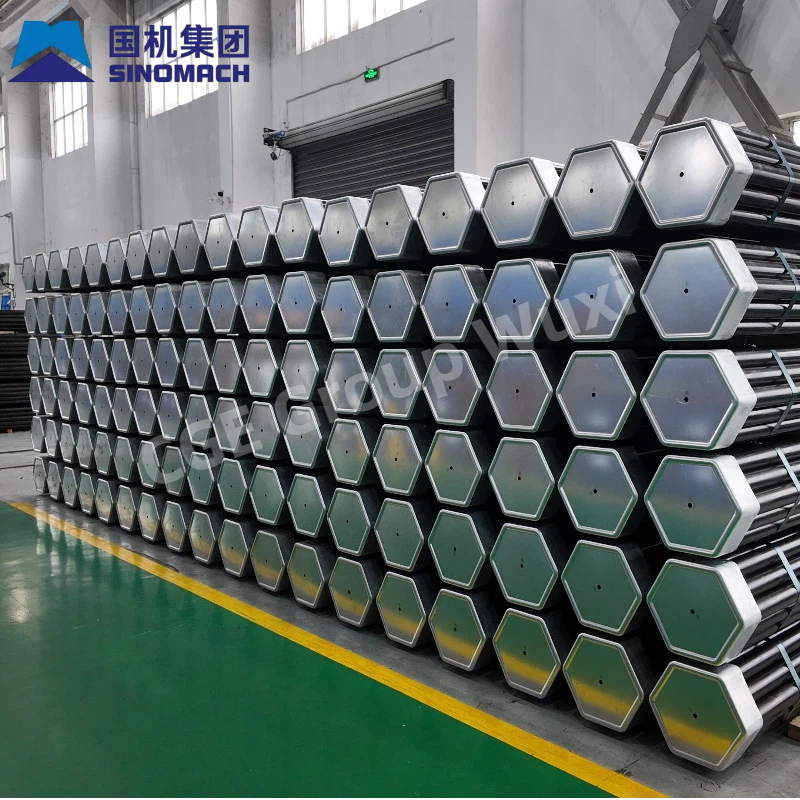
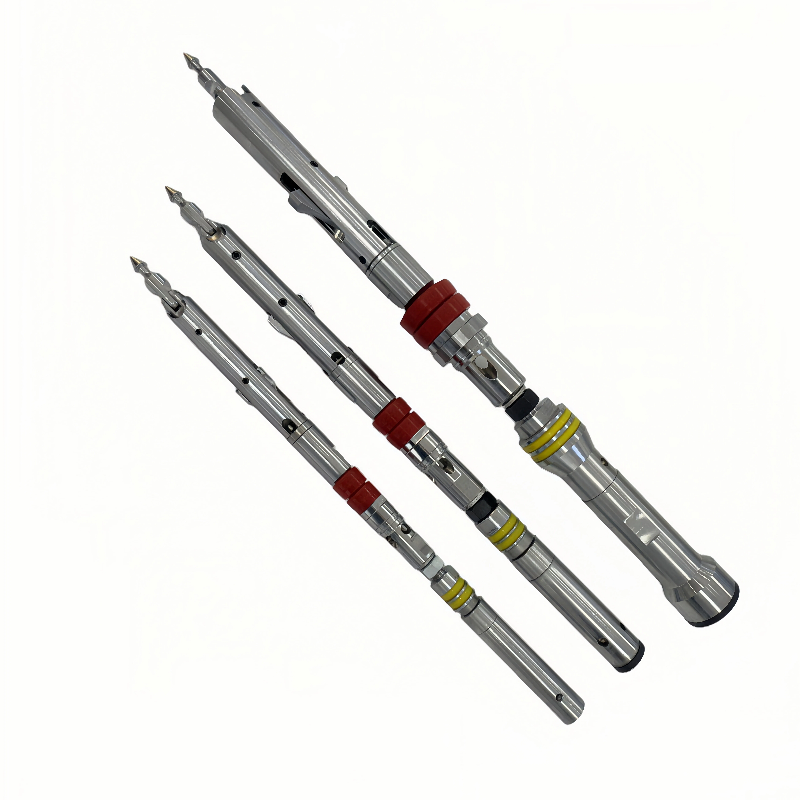
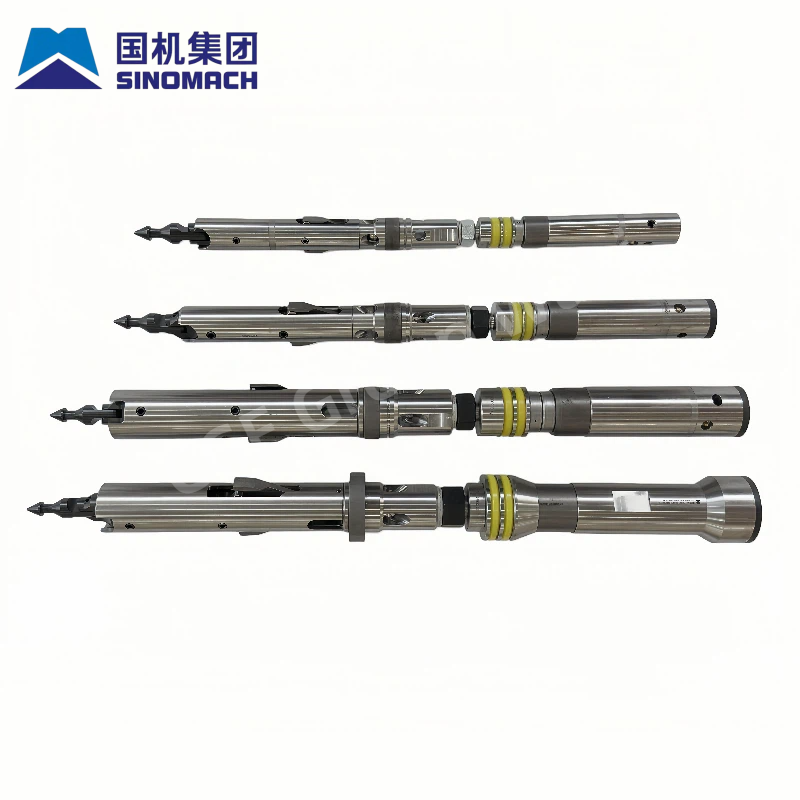
The guide also addresses a failure mode that is often blamed on the bit: losses caused by the tools around it. Core bits, reaming shells, core barrels, overshot assemblies and wireline drill rods interact directly — a worn reaming shell leaves the bit cutting an undersized or spiralled hole, and a rod string with poor straightness loads the crown unevenly and shortens its life.
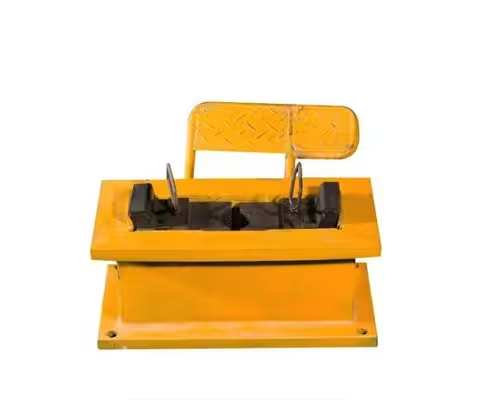
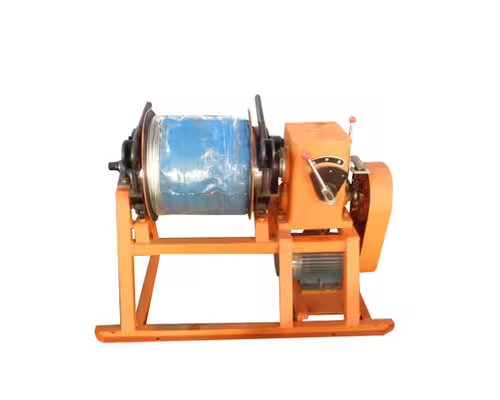
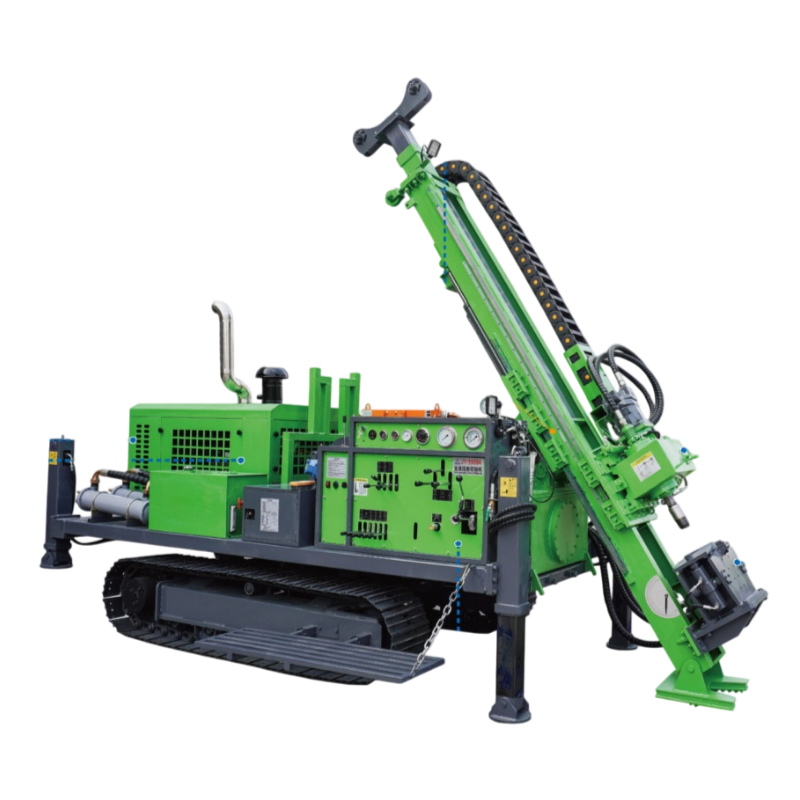
Because CGE WUXI manufactures the full wireline assembly in-house — drill rods, core barrels, overshots, reaming shells, water swivels, hoisting plugs and drill rigs — operators can source a matched system rather than assembling one from multiple suppliers with different tolerances and thread standards.
Custom matrix development, re-tipping and refurbishment
Standard catalogue bits cover the majority of formations, but not all of them. CGE WUXI’s R&D centre develops custom matrix formulations against customer-supplied rock samples, drilling data or drawings, and supports OEM/ODM production with customer marking. Returned bits can be inspected, re-tipped or refurbished where the steel blank and crown profile allow — an option that reduces consumable spend and waste on long programs.
Production is backed by ISO 9001 quality management, incoming metallographic and chemical analysis of raw material, in-process inspection at each stage and a final inspection sampling rate above 30 percent before packing. The company holds more than 80 independent patents covering geological exploration tooling.
“Most drilling cost problems that reach us are not bit quality problems — they are selection problems. The same bit that performs well in limestone will glaze in granite, and the same bit that cuts fast in soft shale will be gone in a few meters in abrasive sandstone. What we wanted to publish is the decision logic, not just a catalogue: which matrix, which crown profile, which waterway arrangement, and why.”
— Product Manager, CGE Group Wuxi Drilling Tools Co., Ltd.
Availability
Detailed datasheets, matrix selection charts, crown profile drawings and sample bits are available on request. Drilling contractors and exploration companies working in hard rock, deep-hole or geothermal conditions are invited to share their formation logs and drilling parameters for a bit recommendation. Minimum order quantity is one piece; custom sizes and customer-marked production are supported.
Website: https://www.cgewxdrillingtools.com/ | Email: [email protected] | Tel : +86-510 85400133
 Hot News
2026-11-27
2026-11-12
2026-11-06
2026-10-29
2026-10-20
2026-09-30
Copyright © CGE Group Wuxi Drilling Tools Co., Ltd. All Rights Reserved - Privacy Policy
 EN